
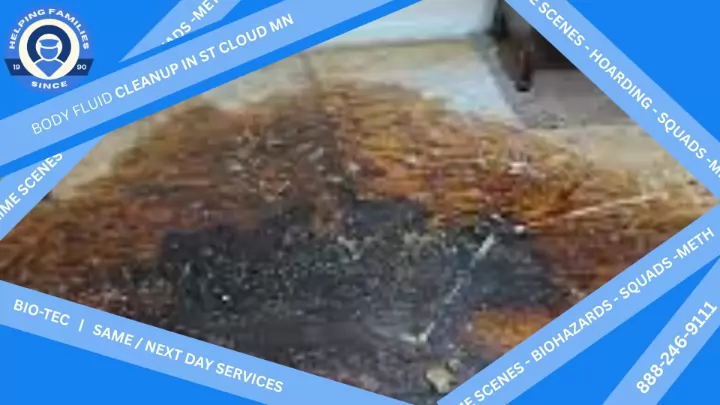
Why Blood And Bodily Fluid Cleanup Specialists Are Essential For Your Health and Safety Startling Fact: Bloodborne pathogens like Hepatitis B can survive in dried blood on surfaces for up to one week. Microscopic biohazards can penetrate subflooring and drywall in minutes. A trauma or biohazard event is an overwhelming crisis. It leaves behind more than just emotional pain. It leaves a dangerous environment that threatens your health. Cleaning these scenes is not a simple task. It is a high-risk technical job. One mistake can lead to long-term illness or property damage. Bio-Tec Emergency Services, LLC has

Blood And Bodily Fluid Cleanup Specialists
Why Blood And Bodily Fluid Cleanup Specialists Are Essential For Your Health and Safety ...
Certified Guidance For Cleaning Up Of Blood Or Bodily Fluids: Bio-Tec's No Out-of-Pocket Biohazard Remediation Table of Contents: Blood Spill Decontamination Protocol and Safety Introduction: The Invisible Risk in Biological Spills The Non-Negotiable Risk: Why Guidance For Cleaning Up Of Blood Or Bodily Fluids Demands Experts The Health Threat: Pathogen Risk Management and Bloodborne Illnesses The Certified Standard: Blood Spill Decontamination Protocol Steps Beyond Surface Cleaning: Bodily Fluid Remediation and Structural Safety Legal Imperative: OSHA Com

Guidance For Cleaning Up Of Blood Or Bodily Fluids
Certified Guidance For Cleaning Up Of Blood Or Bodily Fluids: Bio-Tec's No Out-of-Pocket Biohaz...
🩸 The Scientific Necessity: Why Post Crime Blood And Body Fluid Removal Services Demand Bio-Tec’s Expert Compliance Did you know that handling just one milliliter of contaminated blood without proper protection can transmit deadly pathogens? This startling fact underscores why the cleanup after any traumatic incident is not a cleaning problem it is a public health emergency. When violence, accident, or death occurs, the resulting blood and body fluid removal services must be executed by certified professionals. Ignoring this critical step means risking catastrophic health consequences and facing severe legal liabilities. Standard cleaning methods simply cannot neutrali

Post Crime Blood And Body Fluid Removal
🩸 The Scientific Necessity: Why Post Crime Blood And Body Fluid Removal Services Demand Bio-T...
Expert Bodily Fluid Cleanup Services: How Bio-Tec Ensures Health, Safety, and Compassion Did you know that a single drop of blood can carry pathogens that can live on surfaces for days, or even weeks? The cleanup of human or animal bodily fluids be it blood, vomit, urine, or feces is far more than a simple matter of sanitation. It is a critical biohazard situation. These substances can harbor a dangerous array of bacteria, viruses, and other pathogens that pose a significant health risk to anyone who comes into contact with them.For families, businesses, or property managers in Cusick, WA, the decision to hire a professional for "Bodily Fluid Cleanup ser
Bodily Fluid Cleanup Services
Expert Bodily Fluid Cleanup Services: How Bio-Tec Ensures Health, Safety, an...
How does crime scene cleanup affect the local community?
Professional cleanup restores safety to affected areas, thereby minimizing public health risks and helping maintain community confidence.
What advanced cleaning technologies are employed?
Technologies such as HEPA filtration, ultraviolet disinfection, and steam cleaning are commonly used.
What are long-term decomposition odor solutions for a home?
Long-term solutions for decomposition odors in a home hinge on achieving complete removal and neutralization of the source and all affected materials, followed by comprehensive air and surface treatment. Simply masking the odor or cleaning surfaces will lead to recurrence. The foundational step is the physical removal of all decaying organic matter. This is non-negotiable. Following this, removing all porous materials that have absorbed the odor is critical. This almost always includes carpets, padding, sections of subflooring, drywall, insulation, and any contaminated furniture or textiles. These items are like sponges for decomposition odors and will off-gas the smell indefinitely if not removed and properly disposed of. After removal, thorough cleaning and disinfection of all remaining non-porous surfaces (e.g., concrete, metal, hard plastics) with professional-grade enzymatic cleaners and broad-spectrum disinfectants. This actively breaks down the odor-causing organic molecules and eliminates odor-producing bacteria. For deeply embedded odors in structural elements (like framing wood), odor-encapsulating primers or sealants are essential. These specialized coatings create a barrier that prevents residual odor molecules from leaching out into the air. Finally, atmospheric treatment with professional equipment like ozone generators or hydroxyl generators is necessary to neutralize any lingering airborne odor molecules or those absorbed into materials that cannot be removed. These machines may need to run for extended periods. Post-remediation air quality testing can verify the absence of harmful compounds and odors. Maintaining good ventilation, managing indoor humidity, and preventing future sources of decomposition (e.g., pest control, immediate spill cleanup) are crucial long-term preventative measures. For severe or persistent odors, professional remediation ensures these steps are carried out thoroughly and safely for a permanent solution.
What are the signs that I need mold testing?
Signs include musty odors visible mold growth water damage and unexplained health issues like allergies or respiratory problems.
What happens if biohazard cleaning isnt done properly?
Improper cleaning can result in health risks, contamination, and legal consequences.
What should I do if I suspect a neighbor is hoarding?
If you suspect a neighbor is hoarding, approach the situation with sensitivity and concern. If their hoarding is causing safety hazards, such as pest infestations, foul odors, or fire risks, you may need to report it to local authorities or housing officials. In some cases, community outreach programs can provide assistance without legal action. Encouraging the individual to seek professional help through hoarding cleanup services and mental health support can also be beneficial. Always approach the situation with empathy and avoid judgment.
What is the difference between meth screening and comprehensive testing?
Meth screening typically involves rapid tests that provide immediate, preliminary results indicating the presence of meth residues. Comprehensive testing, on the other hand, involves detailed sampling and laboratory analysis to quantify contamination levels and identify specific areas affected. Comprehensive testing is more accurate and is often required for legal and remediation purposes.
How do cleaning companies address public health concerns?
Strict adherence to safety protocols, effective contaminant removal, and proper waste disposal help protect public and officer health.
How should vehicles be cleaned if used for transporting sick individuals?
The entire vehicle is sanitized using hospital-grade disinfectants to minimize disease transmission risks.
What are the dangers of DIY suicide cleanup?
Attempting DIY suicide cleanup presents numerous significant dangers, making professional intervention almost universally recommended. The most immediate and serious danger is **exposure to biohazards**. Blood, bodily fluids, and other organic matter at the scene can contain dangerous pathogens such as HIV, Hepatitis B and C, MRSA, and other bacteria and viruses. Without proper Personal Protective Equipment (PPE) – such as respirators, full body suits, gloves, and eye protection – individuals risk direct skin contact, inhalation, or ingestion of these infectious agents, leading to potential illness or disease transmission. Beyond the biological risks, theres the danger of **improper waste disposal**. Biohazardous materials cannot be disposed of in regular household trash; they are considered regulated medical waste and require specific, legally compliant disposal procedures to prevent environmental contamination and public health risks. Mismanagement can lead to fines and legal penalties. Furthermore, DIY efforts are often **ineffective at complete remediation**. Blood and fluids can seep into porous materials (e.g., carpet, subflooring, drywall, furniture), creating hidden reservoirs of pathogens and persistent, deeply embedded odors that conventional cleaning methods cannot eliminate. Incomplete cleanup can result in lingering health hazards and a pervasive smell that renders the space uninhabitable. Finally, and perhaps most importantly, the **psychological and emotional trauma** of cleaning up after a suicide is immense. Confronting the physical aftermath of such a tragic event can exacerbate grief, lead to symptoms of PTSD, anxiety, depression, and hinder the grieving process. Professionals handle the physical cleanup discreetly and efficiently, protecting the mental well-being of those affected. For these reasons, attempting DIY cleanup is a hazardous undertaking that should be avoided.
HOME > blog > Bodily Fluid Cleanup > cusick > wa