
Why Blood And Bodily Fluid Cleanup Specialists Are Essential For Your Health and Safety Startling Fact: Bloodborne pathogens like Hepatitis B can survive in dried blood on surfaces for up to one week. Microscopic biohazards can penetrate subflooring and drywall in minutes. A trauma or biohazard event is an overwhelming crisis. It leaves behind more than just emotional pain. It leaves a dangerous environment that threatens your health. Cleaning these scenes is not a simple task. It is a high-risk technical job. One mistake can lead to long-term illness or property damage. Bio-Tec Emergency Services, LLC has

Blood And Bodily Fluid Cleanup Specialists
Why Blood And Bodily Fluid Cleanup Specialists Are Essential For Your Health and Safety ...
Certified Guidance For Cleaning Up Of Blood Or Bodily Fluids: Bio-Tec's No Out-of-Pocket Biohazard Remediation Table of Contents: Blood Spill Decontamination Protocol and Safety Introduction: The Invisible Risk in Biological Spills The Non-Negotiable Risk: Why Guidance For Cleaning Up Of Blood Or Bodily Fluids Demands Experts The Health Threat: Pathogen Risk Management and Bloodborne Illnesses The Certified Standard: Blood Spill Decontamination Protocol Steps Beyond Surface Cleaning: Bodily Fluid Remediation and Structural Safety Legal Imperative: OSHA Com

Guidance For Cleaning Up Of Blood Or Bodily Fluids
Certified Guidance For Cleaning Up Of Blood Or Bodily Fluids: Bio-Tec's No Out-of-Pocket Biohaz...
🩸 The Scientific Necessity: Why Post Crime Blood And Body Fluid Removal Services Demand Bio-Tec’s Expert Compliance Did you know that handling just one milliliter of contaminated blood without proper protection can transmit deadly pathogens? This startling fact underscores why the cleanup after any traumatic incident is not a cleaning problem it is a public health emergency. When violence, accident, or death occurs, the resulting blood and body fluid removal services must be executed by certified professionals. Ignoring this critical step means risking catastrophic health consequences and facing severe legal liabilities. Standard cleaning methods simply cannot neutrali

Post Crime Blood And Body Fluid Removal
🩸 The Scientific Necessity: Why Post Crime Blood And Body Fluid Removal Services Demand Bio-T...
Expert Bodily Fluid Cleanup Services: How Bio-Tec Ensures Health, Safety, and Compassion Did you know that a single drop of blood can carry pathogens that can live on surfaces for days, or even weeks? The cleanup of human or animal bodily fluids be it blood, vomit, urine, or feces is far more than a simple matter of sanitation. It is a critical biohazard situation. These substances can harbor a dangerous array of bacteria, viruses, and other pathogens that pose a significant health risk to anyone who comes into contact with them.For families, businesses, or property managers in McDowell, VA, the decision to hire a professional for "Bodily Fluid Cleanup ser
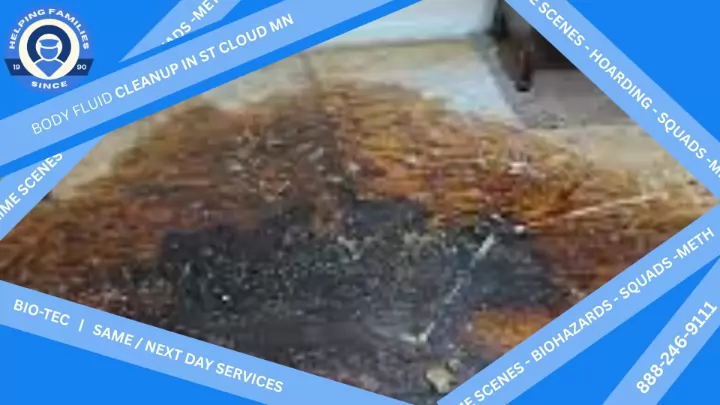
Bodily Fluid Cleanup Services
Expert Bodily Fluid Cleanup Services: How Bio-Tec Ensures Health, Safety, an...
What is the process of a typical professional suicide cleanup?
A typical professional suicide cleanup follows a structured, multi-step process designed to ensure thorough remediation, safety, and discretion. **1. Initial Assessment:** Upon arrival, the cleanup team conducts a meticulous assessment of the scene, identifying the extent of contamination, the types of biohazards present (blood, bodily fluids, tissue), and any structural damage. They develop a detailed action plan. **2. Containment and Safety Protocols:** The affected area is immediately secured to prevent cross-contamination to other parts of the property. This often involves establishing control zones and using plastic sheeting and negative air pressure systems. Technicians don full Personal Protective Equipment (PPE). **3. Removal of Biohazardous Materials:** All visible biohazards, including blood, bodily fluids, and any contaminated debris, are carefully removed using specialized tools and placed into biohazard waste bags. **4. Cleaning and Disinfection:** Surfaces are thoroughly cleaned using industrial-grade, enzymatic cleaners that break down organic matter. This is followed by the application of hospital-grade, broad-spectrum disinfectants to kill bacteria, viruses, and other pathogens. Multiple passes may be required to ensure complete sanitization. **5. Deodorization:** Powerful deodorization techniques are employed to eliminate persistent odors. This often involves the use of ozone generators (in unoccupied areas) or hydroxyl generators to neutralize odor molecules at a chemical level, rather than just masking them. Thermal fogging may also be used to penetrate porous materials. **6. Removal of Porous Materials:** Contaminated porous materials like carpet, padding, subflooring, drywall, and insulation that have absorbed fluids or odors are carefully removed and disposed of as regulated biohazardous waste. **7. Restoration and Repair:** If necessary, the team will repair or replace damaged structural elements (e.g., drywall replacement, subfloor repair) to restore the area to its pre-incident condition. **8. Final Inspection and Clearance:** A thorough final inspection is conducted to ensure all biohazards have been eliminated, odors are gone, and the space is safe for re-occupancy. This comprehensive approach ensures the scene is completely remediated and restored.
Do hoarding cleanup services offer organization training?
Yes, many hoarding cleanup services provide organization training to help clients maintain a clutter-free home after the cleanup. These programs teach practical skills such as decluttering techniques, space optimization, and effective storage solutions. Some services offer personalized coaching to address specific challenges and develop long-term organization habits. Organization training ensures that clients have the tools they need to prevent future hoarding and maintain a healthier living environment.
Can the cleaning process be standardized across different vehicles?
While many procedures are standardized, adjustments are made based on individual vehicle condition and contamination levels.
How are vehicles cleaned after transporting individuals with highly contagious diseases?
Every surface is sanitized using medical-grade disinfectants, and air circulation systems are treated.
What role does technology play in biohazard cleaning?
Advanced diagnostic and cleaning equipment enhance efficiency and ensure that all contaminants are removed.
What challenges are unique to cleaning police vehicles?
The need to preserve sensitive evidence, work within confined areas, and handle aggressive contaminants are common challenges.
What are the economic benefits of air quality testing?
Investing in professional air quality testing offers significant economic benefits. By identifying and mitigating air quality issues early, homeowners and businesses can avoid costly health treatments, legal liabilities, and structural repairs. For example, addressing mold growth or radon exposure through early detection prevents expensive remediation or medical bills. In workplaces, improving air quality boosts employee productivity, reducing sick days and enhancing overall efficiency. For property owners, ensuring good air quality adds value to their assets and increases tenant satisfaction. Moreover, compliance with air quality regulations avoids fines and potential legal challenges, making professional testing a cost-effective measure for long-term savings.
What is the best way to get rid of a decomposition smell for biological decay?
The best way to get rid of a decomposition smell from biological decay is to employ a comprehensive, multi-phase approach that systematically addresses the source, cleans and disinfects contaminated surfaces, and neutralizes residual odors. 1. Source Identification and Removal: This is the absolute first and most critical step. You must find and safely remove all decaying biological material (e.g., animal carcass, bodily fluids, neglected food). This often involves inspecting hidden areas like wall cavities, attics, crawl spaces, or behind appliances. 2. Containment and Ventilation: Before and during cleanup, contain the affected area to prevent cross-contamination to other parts of the property. Open windows and use industrial-grade fans to ventilate the space thoroughly. 3. Removal of Contaminated Porous Materials: Any porous materials that have absorbed the biological fluids or odors must be removed. This typically includes carpet, carpet padding, certain types of flooring, subflooring, drywall, insulation, and furniture. These materials act as odor reservoirs and will continuously release the smell if not removed. 4. Deep Cleaning and Disinfection: All remaining non-porous surfaces must be meticulously cleaned and disinfected. Use an enzymatic cleaner first, which contains beneficial bacteria that break down the organic molecules causing the odor. Follow with a hospital-grade broad-spectrum disinfectant to kill any remaining bacteria, viruses, and pathogens. Multiple cleaning passes may be necessary. 5. Odor Neutralization (Atmospheric Treatment): This is where specialized equipment comes in. Ozone generators are highly effective in unoccupied spaces, as ozone oxidizes and destroys odor molecules. Hydroxyl generators are a safer alternative for spaces where people or pets may be present, as they produce hydroxyl radicals that neutralize odors. These machines need to run for an extended duration, often days, to be effective. 6. Sealing (Encapsulation): For surfaces that may have absorbed odors deeply but cannot be removed (e.g., concrete subfloor, structural wood), applying an odor-blocking primer or sealant creates a barrier, preventing the further off-gassing of decomposition odors. 7. Air Purification: Using air scrubbers with HEPA and activated carbon filters can help remove any remaining airborne odor molecules and improve overall air quality. Due to the biohazard risks and the complexity of these odors, professional biohazard cleanup and odor remediation services are highly recommended for effective and safe biological odor control and decomposition odor abatement.
What actions are necessary after transporting individuals with respiratory illnesses?
Sanitization targets all surfaces and air circulation systems to eliminate airborne pathogens.
How do professionals manage contaminated water in a crime scene?
Contaminated water is collected, treated with specialized equipment, and disposed of safely in accordance with regulations.
HOME > blog > Bodily Fluid Cleanup > mcdowell > va