
Certified Guidance For Cleaning Up Of Blood Or Bodily Fluids: Bio-Tec's No Out-of-Pocket Biohazard Remediation Table of Contents: Blood Spill Decontamination Protocol and Safety Introduction: The Invisible Risk in Biological Spills The Non-Negotiable Risk: Why Guidance For Cleaning Up Of Blood Or Bodily Fluids Demands Experts The Health Threat: Pathogen Risk Management and Bloodborne Illnesses The Certified Standard: Blood Spill Decontamination Protocol Steps Beyond Surface Cleaning: Bodily Fluid Remediation and Structural Safety Legal Imperative: OSHA Com

Guidance For Cleaning Up Of Blood Or Bodily Fluids
Certified Guidance For Cleaning Up Of Blood Or Bodily Fluids: Bio-Tec's No Out-of-Pocket Biohaz...
🩸 The Scientific Necessity: Why Post Crime Blood And Body Fluid Removal Services Demand Bio-Tec’s Expert Compliance Did you know that handling just one milliliter of contaminated blood without proper protection can transmit deadly pathogens? This startling fact underscores why the cleanup after any traumatic incident is not a cleaning problem it is a public health emergency. When violence, accident, or death occurs, the resulting blood and body fluid removal services must be executed by certified professionals. Ignoring this critical step means risking catastrophic health consequences and facing severe legal liabilities. Standard cleaning methods simply cannot neutrali

Post Crime Blood And Body Fluid Removal
🩸 The Scientific Necessity: Why Post Crime Blood And Body Fluid Removal Services Demand Bio-T...
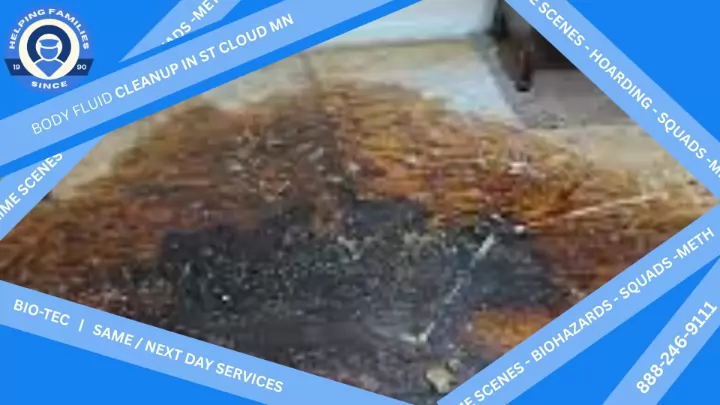
Expert Bodily Fluid Cleanup Services: How Bio-Tec Ensures Health, Safety, and Compassion Did you know that a single drop of blood can carry pathogens that can live on surfaces for days, or even weeks? The cleanup of human or animal bodily fluids be it blood, vomit, urine, or feces is far more than a simple matter of sanitation. It is a critical biohazard situation. These substances can harbor a dangerous array of bacteria, viruses, and other pathogens that pose a significant health risk to anyone who comes into contact with them.For families, businesses, or property managers in Trumann, AR, the decision to hire a professional for "Bodily Fluid Cleanup ser
Bodily Fluid Cleanup Services
Expert Bodily Fluid Cleanup Services: How Bio-Tec Ensures Health, Safety, an...
How do I choose between multiple meth testing companies?
Choosing the right meth testing company involves evaluating several factors. Look for firms with certifications (e.g., from the AIHA or local environmental health departments), proven experience, and transparency in their methods. Ask for sample reports, pricing structures, turnaround times, and client references. Also verify if their labs are accredited and whether they offer both initial and post-remediation testing. Avoid companies that push immediate remediation without proper testing—this could be a red flag. Ideally, you want a firm that separates testing and remediation functions to avoid conflicts of interest and ensure unbiased results.
How does hoarding affect home value?
Hoarding can significantly decrease home value due to structural damage, pest infestations, and unsanitary conditions. A hoarded home may require extensive cleaning and repairs before it can be sold. Hoarding cleanup services help restore the property by removing clutter, deep cleaning, and addressing hazards. In severe cases, professional renovation may be necessary to bring the home back to marketable condition. A clean, well-maintained home can regain its value and attract buyers more easily.
How do hoarding cleanup services approach extreme cases?
In extreme hoarding cases, professional cleanup services follow a systematic approach to ensure safety and efficiency. The process starts with an assessment of the home’s condition, identifying hazards such as mold, pests, or biohazards. The team then develops a customized cleanup plan, working closely with the client to sort and declutter items. They also address sanitation issues by deep cleaning and disinfecting affected areas. Extreme cases may require collaboration with mental health professionals, pest control services, or structural repair specialists. The goal is to restore a safe, livable environment while providing support to prevent relapse.
What specialized vehicles are used in crime scene cleanup?
Outfitted vehicles equipped with decontamination systems, storage for hazardous materials, and advanced cleaning equipment are commonly used.
What is the process for handling contamination around emergency vehicle lighting controls?
Cleaning involves precision tools to ensure all biohazards are removed without disrupting functionality.
Can tear gas residue contaminate indoor spaces?
Yes, tear gas residue can penetrate indoor spaces through open windows, doors, and ventilation systems. The fine particles can settle on surfaces and linger in the air, leading to prolonged exposure even after the initial dispersal. Proper cleanup is necessary to ensure that indoor spaces are free from tear gas contamination.
How often should properties be tested for meth contamination?
Properties should be tested for meth contamination when there is a reasonable suspicion of past meth production or use, such as after a tenant eviction or before purchasing a property with an unknown history. Routine testing is not typically necessary unless specific concerns arise.
What are effective decomposition odor abatement techniques?
Effective decomposition odor abatement techniques combine immediate intervention with comprehensive remediation strategies, focusing on both source removal and advanced atmospheric treatment. The absolute first step is identifying and safely removing the source of the decomposition. This means physically removing the deceased organism or contaminated materials. Following source removal, physical cleaning is essential. All affected non-porous surfaces should be thoroughly scrubbed and disinfected using professional-grade, broad-spectrum cleaners and disinfectants. For porous materials like drywall, carpeting, subflooring, or fabrics that have absorbed fluids or odors, removal and proper disposal as biohazardous waste are often non-negotiable, as odors can become deeply embedded. Once the physical cleaning is complete, chemical neutralization using enzyme-based cleaners is applied to break down remaining organic residues that contribute to the odor. These enzymes literally consume the odor-causing molecules. For airborne and deeply absorbed odors, advanced atmospheric treatment is crucial. This includes deploying ozone generators (in unoccupied spaces only) or hydroxyl generators (safer for continuous use). These machines produce reactive compounds that oxidize and destroy odor molecules, rather than just masking them. Thermal fogging with specialized deodorizing agents can also penetrate into cracks and crevices, neutralizing odors in hard-to-reach areas. Finally, if residual odors persist or if surfaces were highly contaminated, odor encapsulating primers or sealants can be applied to create a barrier, preventing any further off-gassing of odors. Throughout the process, ventilation with powerful air movers and air scrubbers equipped with HEPA and carbon filters helps to circulate and purify the air. The most effective abatement often involves a multi-layered approach, typically best executed by certified biohazard and odor remediation professionals.
How is biohazardous waste transported safely from crime scenes?
Waste is sealed in leak-proof containers and transported to certified disposal facilities in full compliance with hazardous waste regulations.
What happens if law enforcement uniforms spread biohazards within vehicles?
The uniforms are isolated, and the vehicle is sanitized where contamination occurred.
HOME > blog > Bodily Fluid Cleanup > trumann > ar