
Certified Guidance For Cleaning Up Of Blood Or Bodily Fluids: Bio-Tec's No Out-of-Pocket Biohazard Remediation Table of Contents: Blood Spill Decontamination Protocol and Safety Introduction: The Invisible Risk in Biological Spills The Non-Negotiable Risk: Why Guidance For Cleaning Up Of Blood Or Bodily Fluids Demands Experts The Health Threat: Pathogen Risk Management and Bloodborne Illnesses The Certified Standard: Blood Spill Decontamination Protocol Steps Beyond Surface Cleaning: Bodily Fluid Remediation and Structural Safety Legal Imperative: OSHA Com

Guidance For Cleaning Up Of Blood Or Bodily Fluids
Certified Guidance For Cleaning Up Of Blood Or Bodily Fluids: Bio-Tec's No Out-of-Pocket Biohaz...
🩸 The Scientific Necessity: Why Post Crime Blood And Body Fluid Removal Services Demand Bio-Tec’s Expert Compliance Did you know that handling just one milliliter of contaminated blood without proper protection can transmit deadly pathogens? This startling fact underscores why the cleanup after any traumatic incident is not a cleaning problem it is a public health emergency. When violence, accident, or death occurs, the resulting blood and body fluid removal services must be executed by certified professionals. Ignoring this critical step means risking catastrophic health consequences and facing severe legal liabilities. Standard cleaning methods simply cannot neutrali

Post Crime Blood And Body Fluid Removal
🩸 The Scientific Necessity: Why Post Crime Blood And Body Fluid Removal Services Demand Bio-T...
Expert Bodily Fluid Cleanup Services: How Bio-Tec Ensures Health, Safety, and Compassion Did you know that a single drop of blood can carry pathogens that can live on surfaces for days, or even weeks? The cleanup of human or animal bodily fluids be it blood, vomit, urine, or feces is far more than a simple matter of sanitation. It is a critical biohazard situation. These substances can harbor a dangerous array of bacteria, viruses, and other pathogens that pose a significant health risk to anyone who comes into contact with them.For families, businesses, or property managers in Warner, SD, the decision to hire a professional for "Bodily Fluid Cleanup ser
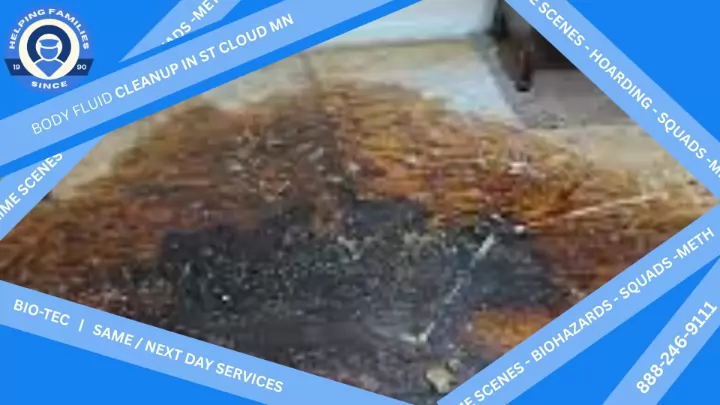
Bodily Fluid Cleanup Services
Expert Bodily Fluid Cleanup Services: How Bio-Tec Ensures Health, Safety, an...
What should I do while waiting for professional blood cleanup?
While waiting, avoid entering the contaminated area to prevent exposure. If possible, secure the site to restrict access and inform others of the hazard. Do not attempt to clean the area yourself.
Can I use DIY methods for dead body smell removal, or do I need a professional?
While DIY methods might offer limited temporary relief for very minor odors, attempting dead body smell removal yourself is strongly discouraged and often ineffective for anything beyond a small, recently deceased rodent. For situations involving a human decomposition or a larger animal, professional intervention is absolutely necessary. Heres why: Firstly, a decomposing body is a significant biohazard. It releases bloodborne pathogens (e.g., HIV, Hepatitis), bacteria, viruses, and other infectious agents. Without proper personal protective equipment (PPE) like respirators, full body suits, and gloves, you risk severe exposure to these contaminants. Secondly, the odor itself is incredibly persistent and penetrates deeply into porous materials like wood, drywall, concrete, and fabrics. Household cleaners and deodorizers simply mask the smell or clean the surface; they do not break down the microscopic odor-causing molecules embedded within materials. Professionals use specialized enzymatic cleaners that actually consume the organic matter, and powerful equipment like ozone or hydroxyl generators that neutralize odors at a molecular level. Thirdly, professionals understand the complex chemistry of decomposition odors and how to effectively remediate them. They have the expertise to locate hidden sources of contamination (e.g., fluids that seeped into subflooring or wall cavities) and perform a complete cleanup and disinfection. Finally, the emotional and psychological toll of dealing with a decomposition scene is immense. A professional service provides compassionate and discreet cleanup, allowing individuals to grieve without the added burden of a traumatic cleanup. In many jurisdictions, laws also govern the proper handling and disposal of biohazardous waste, which professionals are equipped to manage legally and safely. For a complete, safe, and effective resolution, always defer to a professional biohazard and odor remediation company for dead body smell removal.
What measures are used to clean vehicles exposed to hazardous drug packaging?
Professionals carefully remove drug residue and sanitize affected areas to eliminate contamination risks.
What types of incidents are considered high-risk for biohazards?
High-risk incidents include violent crimes, large-scale accidents, and events with significant contamination from blood and bodily fluids.
Are there legal restrictions on pigeon control?
Some areas have regulations regarding pigeon deterrents and removal methods, so check local laws before taking action.
How advanced is the technology used in these cleaning methods?
Modern cleaning methods incorporate state-of-the-art equipment such as bio-scanners, high-efficiency disinfectant sprayers, and advanced HEPA filters.
What is the process for handling contamination around emergency vehicle lighting controls?
Cleaning involves precision tools to ensure all biohazards are removed without disrupting functionality.
What causes the smell of decomposition in a house or vehicle?
The distinctive and highly unpleasant smell of decomposition, whether in a house or vehicle, is primarily caused by the biological breakdown of organic matter by bacteria and other microorganisms. This process releases a complex mixture of volatile organic compounds (VOCs) and gases. When a living organism dies, its cells begin to break down (autolysis), and then microorganisms (primarily bacteria from the gut, but also environmental bacteria and fungi) begin to consume the tissues. This process, known as putrefaction, produces a cocktail of odorous chemicals. Key compounds responsible for the characteristic smell include: Cadaverine and Putrescine, aptly named for their association with decaying flesh, are polyamines that give off a putrid, rotten odor. Hydrogen sulfide, known for its rotten egg smell, and various other sulfur-containing compounds like methanethiol (rotting cabbage) and dimethyl disulfide/trisulfide (garlic-like) are also prominent byproducts of bacterial activity. Ammonia and methane are also released as decomposition progresses. The specific profile and intensity of the odor can vary depending on factors such as temperature, humidity, oxygen availability, the type of organic matter, and the presence of insects. In a house, this could be from a deceased animal in a wall, a neglected food spill, or an unattended death. In a vehicle, moisture ingress combined with organic debris (e.g., forgotten food, spilled drinks, tracked-in dirt) creates an ideal environment for microbial growth, leading to these same putrefactive odors within the enclosed space of the cars interior. Understanding these chemical byproducts is crucial for selecting the most effective odor removal strategies, which aim to neutralize or eliminate these specific compounds rather than simply masking them.
What happens if a hoarder refuses cleanup services?
If a hoarder refuses cleanup services, it’s important to approach the situation with empathy and patience. Forcing a cleanup without consent can cause distress and worsen the condition. Family members or social workers may need to intervene by educating the individual about the risks of hoarding. In extreme cases where safety is compromised, legal action or court-mandated cleanups may be necessary. Mental health professionals can help encourage acceptance of cleanup services by addressing the underlying psychological barriers.
What are the health risks of rodent droppings?
Exposure to rodent droppings can lead to respiratory issues, fever, and severe illnesses like Hantavirus Pulmonary Syndrome. Children, the elderly, and individuals with compromised immune systems are particularly vulnerable.
HOME > blog > Bodily Fluid Cleanup > warner > sd